Production and sale of foie gras banned in Brazil
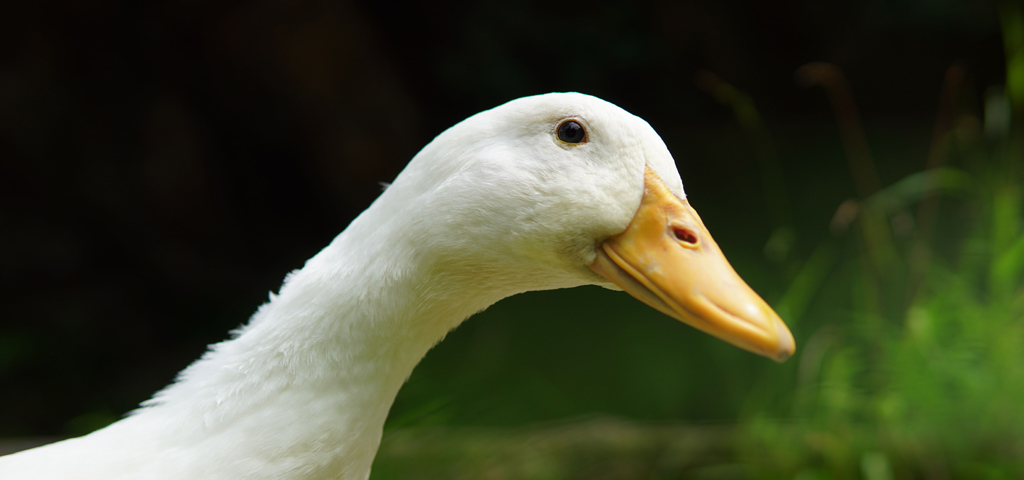
Law 15475,1 published on July 24, 2026 in the Official Gazette of the Union, banned the production and sale of foods obtained through the forced feeding of animals. The penalty for those who carry out this practice is three months to one year in prison, in addition to a fine.
The ban includes foie gras (although it is not limited to it), a product made from the liver of ducks and geese subjected to the method known as gavage, which consists of inserting a tube into their throats to force them to ingest large quantities of food, causing an abnormal enlargement of their livers.2 The ban applies to both fresh and processed products.
Senator Eduardo Girão (Novo-CE) introduced the bill that gave rise to this law (PL 90/2020).3 The Senate Environment Committee (CMA) approved the text in 2022,4 and the Chamber of Deputies ratified it in April 2026.
What does the law say?
Below we reproduce the text of Law 15,475:5
LAW No. 15,475, OF JULY 23, 2026
Bans the production and sale of any food product obtained through methods of forced feeding of animals.
THE PRESIDENT OF THE REPUBLIC. I hereby make known that the National Congress decrees and I sanction the following Law:
Art. 1º The production and sale of any food product obtained through methods of forced feeding of animals is banned throughout the national territory.
Sole paragraph. The provisions of the main clause of this article include, among others, the production and sale of foie gras, that is, the fatty liver of ducks or geese, whether fresh or preserved.
Art. 2º For the purposes of this Law, forced feeding means any method, whether mechanical or manual, that consists of forcing the intake of food or food supplements beyond animals’ natural limit of satiety, using any kind of utensil to pour the food directly into their throat, esophagus, crop, or stomach.
Art. 3º Failure to comply with the provisions of art. 1 of this Law subjects offenders to the penalties established in art. 32 of Law No. 9,605 of February 12, 1998, and to the administrative sanctions provided for in art. 72 of the same Law.
Art. 4º This Law enters into force 180 (one hundred and eighty) days after its official publication.
The rationale behind the bill
The approval of Law 15,475 marks progress in the consideration of animals in legislation, not only because it bans (rather than regulates) a practice of animal exploitation, but also because the justification it rested on focused exclusively on the consideration of animals, without resorting to any anthropocentric or environmentalist argument.
Below we reproduce the main rationale set out in bill 90/2020,6 from which this law derived:
The ducks and geese used to make foie gras are force-fed two or three times a day through a tube inserted into their throats. This feeding makes their livers swell, growing up to 12 times their size, and their fat level rise by up to 50%. This process (gavage) is carried out for around 12 to 15 days before their death. Overfeeding causes a disease characterized by the accumulation of fat in the cells of their livers. In addition, they suffer injuries to the throat and esophagus, caused by the tube that carries the feed directly to the stomach, which leads to inflammation, infections, and difficulty breathing. Diseases of the digestive system can cause the premature death of these animals. Finally, the size of the enlarged liver makes breathing difficult and makes walking painful.
The bill also presented the following additional justifications:
·⠀Many places around the world have already banned foie gras and, within the European Union, it is only produced in Spain, Romania, France, Hungary, and the Belgian region of Wallonia7
·⠀Article 225 of the Constitution, which obliges public authorities to ban practices that subject animals to acts of cruelty
·⠀Law 9605 includes, among crimes against animals, committing acts of abuse or mistreatment of, or injuring or mutilating, wild, domestic or domesticated, native or exotic animals
Setting a precedent
Another positive aspect of the approval of Law 15475 is that it may set a precedent for banning other practices of animal exploitation. For example, when the Senate Environment Committee (CMA) approved bill 90/2020 in 2022, the report stated the following:
The bill before us addresses the issue of the forced feeding of ducks and geese. However, future bills could deal with the removal of pigs’ tails without anesthesia, the overcrowding of birds in cages, and, in the case of cows, branding with hot irons and the removal of horns (dehorning).8
What animal advocates can learn from this law
The use of indirect arguments, that is, arguments that appeal to the impact animal exploitation has on human health or on the environment, has drawn criticism for several reasons. One is that, because these arguments do not challenge the lack of consideration for animals, they do not help create an environment conducive to a change in attitudes towards them. Another is that they can reinforce precisely those views that uphold the lack of consideration for animals. Finally, they can also convey the idea that harming animals is only a problem if doing so harms humans or the environment in some way, however indirect.9
Those who defend the use of indirect arguments, on the other hand, claim that because most people hold anthropocentric and environmentalist values, it will be easier to persuade them to approve something grounded in those values.
However, Law 15475 shows that it is sometimes possible to get a law approved by appealing exclusively to consideration for animals. In addition, many other bills that rely on indirect arguments have not succeeded, at least so far. This is the case, for example, of bill 2,613/2026,10 which aims to ban the killing of donkeys by appealing to the risk of the species going extinct and to biosecurity for humans.
This does not mean that appealing to consideration for animals guarantees success when passing laws that benefit animals, nor that appealing to anthropocentric and environmentalist values guarantees failure. But we can affirm that, all else being equal, we are more likely to achieve laws that benefit animals in a society that has greater consideration for them. This is one of the reasons why using arguments centered on consideration for animals is of great importance in advocacy work.
Notes
1 Brasil (2026) “Lei nº 15.475 de 23/07/2026”, normas.leg.br, 24/07/2026 [accessed on 8 August 2026].
2 Agência Senado (2026) “Brasil proíbe produção e venda de ‘foie gras’ feito por alimentação forçada”, Senado Notícias, 24/07/2026 [accessed on 8 August 2026].
3 Girão, E. (2026) “Projeto de Lei n° 90, de 2020”, Senado Federal, 24/07/2026 [accessed on 8 August 2026].
4 Agência Senado (2022) “CMA aprova projeto que proíbe produção e comercialização de ‘foie gras’”, Senado Notícias, 11/05/2022 [accessed on 8 August 2026].
5 Brasil (2026) “Lei nº 15.475 de 23/07/2026”, op. cit.
6 Girão, E. (2026) “Projeto de Lei n° 90, de 2020”, op. cit.
7 The Brussels Times (2023) “Animal welfare NGO calls on the EU to ban force feeding of birds for foie gras”, The Brussels Times, 18 July 2023 [accessed on 9 August 2026].
8 Agência Senado (2022) “CMA aprova projeto que proíbe produção e comercialização de ‘foie gras’”, op. cit.
9 Cf. Cunha, L. C. (2024) “Discutindo o uso de argumentos antropocêntricos e ambientalistas no ativismo de defesa animal”, Senciência e ética: perguntas e respostas, 22 de abril de 2024 [accessed on 8 August 2026]; Animal Ethics (2025) “Should we use environmentalist and anthropocentric arguments to defend animals?”, Animal Ethics, 25 Feb 2025 [accessed on 8 August 2026]; Dorado, D. (2026) “Why health-based vegan advocacy may harm more animals than it saves”, Food Ethics, 11, 38 [accessed on 8 August 2026].
10 Agência Senado (2026) “Projeto proíbe abate de jumentos devido ao risco de extinção”, Senado Notícias, 22/06/2026 [accessed on 8 August 2026].