New Animal Ethics report on sentience in decapod crustaceans
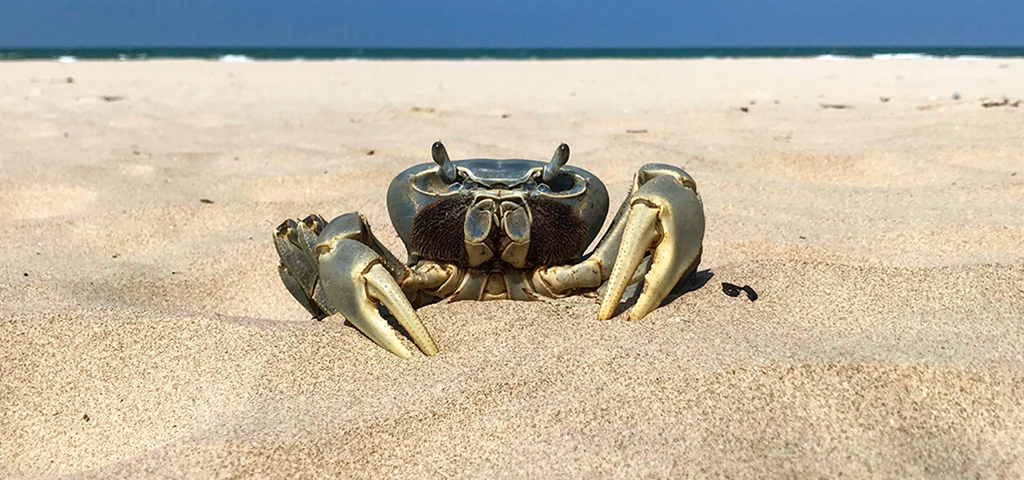
Animal Ethics has just published a new report on sentience in decapod crustaceans. The report is part of an international campaign that seeks to raise awareness about one of the most neglected and exploited groups of animals: aquatic animals, especially invertebrates.
Download or read the full report:
→ Sentience in decapod crustaceans: scientific aspects and ethical implications
The report is divided into three parts:
·⠀Part 1 – Description of the facts
·⠀Part 2 – Ethical implications
·⠀Part 3 – What can we do to change the situation of decapods
Below is a brief overview of what each part covers.
Describing the facts
The first part, titled Description of the facts, comprises chapters 1 to 3.
Chapter 1 presents definitions of two key terms for this debate: moral consideration and sentience. This chapter also explains why sentience matters for questions of moral consideration.
Chapter 2 presents the evidence of sentience in decapod crustaceans, along with an explanation of the methodology used in the studies on their sentience.
Chapter 3 describes in detail how decapod crustaceans are harmed when they are exploited, including the methods by which they are handled and killed.
What should we do?
The second part, titled Ethical implications, comprises chapters 4 and 5.
Chapter 4 answers some of the main objections to the moral consideration of decapods. Some of these objections raise doubts about their sentience, while others question sentience as a criterion of moral consideration. In addition to answering these objections, the chapter presents the argument from relevance and the principle of equal consideration, two pillars on which the full moral consideration of all sentient beings rests.
Chapter 5 addresses the question of the harm of death. It explains what the harm of death consists of and how this applies to the case of decapods. It also answers objections claiming that these animals would not be harmed by death, or that they would be harmed by it only slightly. Finally, the chapter presents some ways of calculating the magnitude of the harm of death, taking into account the moment when it occurs, and the ethical implications of this.
How can we do it?
The third part, titled What can we do to change the situation of decapods, comprises chapters 6 to 12. This part assesses several possible strategies for changing the situation of these animals.
Chapter 6 lists the various strategies compared to each other.
Chapter 7 compares two strategies that aim to tackle consumption: one focused on veganism, and one focused on reducing consumption.
Chapter 8 discusses the strategy of pursuing the development of alternatives to animal-based foods, comparing the impact (current, and projected for up to 10 years) of three alternatives: plant-based products, cultivated meat, and proteins made from fermented products and algae. The chapter also discusses the advantages and disadvantages of focusing on food technology compared with strategies that have other focuses.
Chapter 9 compares two strategies that attempt to increase consideration for animals: one arguing that they should receive some consideration, and another arguing that they should receive equal consideration. These strategies are compared with each other and with other strategies that do not focus on increasing consideration for animals.
Chapter 10 discusses the strategy of trying to secure legal rights for animals.
Chapter 11 discusses the strategy of trying to regulate animal exploitation.
Finally, Chapter 12 offers some suggestions for further work on what the report presents, aiming at greater precision in the assessment of the different strategies.
Help us continue our work!
None of our work would be possible without the generosity of our financial supporters.
If you believe our work is worthwhile, donate to Animal Ethics now. Your support will help us continue this vital work in 2026. Here you can see a summary of the work we did in 2025.