Invertebrate animals
Invertebrates make up the overwhelming majority of animals, yet their interests are routinely disregarded due to speciesist assumptions about which beings deserve moral consideration. Insects and shrimps are exploited for food, silk, and other products on a massive scale, and the evidence increasingly indicates that many of these animals are sentient beings.
The pages below examine this issue from two angles. Some describe the specific ways these animals are harmed by human exploitation, including the scale of the numbers involved and the methods used to kill them. Others review the scientific evidence that supports the recognition of sentience in a wide range of invertebrates, along with recent developments such as the New York Declaration on Animal Consciousness and the Cambridge Declaration on Consciousness.
Taken together, these texts aim to provide a solid basis for extending moral consideration to invertebrates, whose enormous population means they are among the animals most affected by human activity.
Exploitation of invertebrate animals
This section examines the specific ways in which humans exploit invertebrate animals, analyzing the scale of the numbers involved and the methods used to kill them.
The exploitation of invertebrates in numbers
Invertebrate animals are the overwhelming majority of animals exploited by humans, yet they almost never appear in the statistics.
The use of insects for food
The use of insects for food is a form of animal exploitation that harms a huge number of animals and has been growing significantly in recent years. This article details how insects are harmed when used for food.
Silk
Approximately 6,000 larvae are killed to produce one kilogram of silk. This text explains how silkworms are harmed during the silk production process.
Bee exploitation
Bees are harmed in the production of honey and other products. This article issues related to their sentience and the diseases to which they are vulnerable.
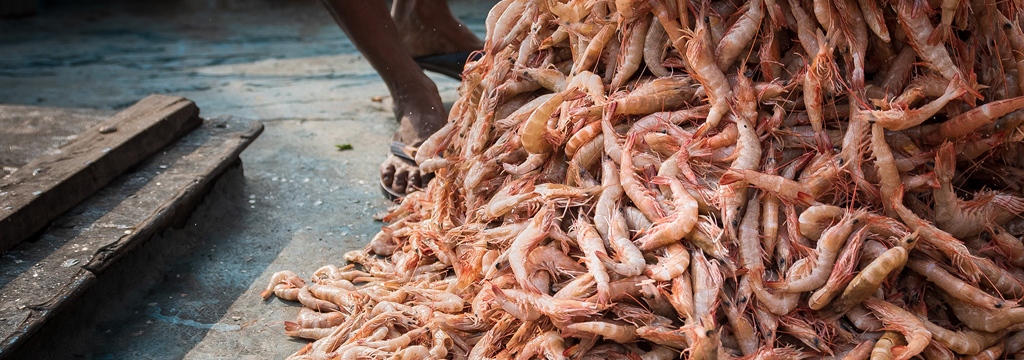
Considering shrimp farming on International Animal Rights Day
Shrimp are among the animals most exploited by humans. This article reflects on the experiences of these animals, describes how they are harmed through exploitation, and proposes a new way of looking at them.
The scientific evidence for sentience
It is worth clarifying why the interests of invertebrates are important. The following pages review the behavioral, neurological, and developmental evidence that supports recognizing sentience across a wide range of invertebrate species.
Invertebrate sentience: A review of the behavioral evidence
Examining the anatomical and behavioral characteristics of a range of invertebrates can help us estimate which of them are sentient. This article reviews the behavioral evidence.
Invertebrate sentience: A review of the neuroscientific literature
Insights from neuroscience allow us to understand the physical structures underlying consciousness in the brain. This literature review examines what neuroscientific evidence says about invertebrate sentience.
An illustrated physiology of nervous systems in invertebrates
This article examines the relevant characteristics of different invertebrates’ nervous systems in relation to the criteria for consciousness, using schematic illustrations to show how centralization occurs in them.
The development of sentience in juvenile animals
Understanding when sentience emerges in development is crucial to gauging how much suffering an animal experiences early in life. This text investigates that question across various types of animals, including invertebrates.
Sentience in aquatic animals
This article aims to deepen our understanding of aquatic animals as sentient beings affected by our actions and omissions. It examines two issues to help us better understand what we can do for them: their sentience and the harms they suffer.
Sentience in aquatic animals: FAQ
This text answers frequently asked questions about the sentience of aquatic animals (including invertebrates), as well as their exploitation and the related ethical issues.
Articles on invertebrate animals
We have published an article on aquatic animals and an article on decapods. These articles can help us learn more about what we can do to help these animals.
Sentience in aquatic animals
This article examines these largely neglected issues to gain a deeper understanding of the situation of aquatic animals as sentient individuals who are affected by our actions and our omissions. With this objective, this article more specifically examines two questions: the sentience of these animals and the different harms that they suffer.
Sentience in decapod crustaceans
The aim of this paper is to investigate the scientific evidence for sentience in decapod crustaceans and to highlight its implications for the moral treatment of these beings. It discusses five types of strategies aimed at improving the situation of decapods and, in a broader sense, that of animals in general.
Scientific and institutional recognition
Beyond individual research findings, the growing evidence for invertebrate sentience has begun to receive formal recognition from the scientific community. The following two declarations mark key milestones in that process.
10th Anniversary of the Cambridge Declaration on Consciousness
On July 7, 2012, a group of prominent scientists from around the world signed the Cambridge Declaration, affirming that many types of nonhuman animals are sentient, including many invertebrates. This text analyzes the declaration’s impact in the ten years following its signing.
The New York Declaration on Animal Consciousness stresses the ethical implications of animal consciousness
The New York Declaration on Animal Consciousness, signed in 2024, marks an important recognition of the growing scientific evidence for sentience in a wide range of animals, including all vertebrates and many invertebrates. This text comments on the declaration.
Methodological tools
Finally, understanding the scale of the problem requires tools to estimate invertebrate populations and, by extension, the scale of their suffering.
Identifying predictors of insect abundance
Factors that indicate the degree of insect abundance in a given location can help us estimate the total amount of insect suffering there, as well as the consequences of decisions that could affect these populations. This article explains how to identify predictors of insect abundance.