どのような存在に意識があるのか?
意識があるかどうかを判断するために我々がもつ基準に照らすなら、脊椎動物や無脊椎動物の多くは意識があると結論づけるのが妥当である。中枢神経系をもち、その中枢器官(基本的には脳)がある程度発達した動物は〔意識をもつ〕比較的明確なケースである。しかし、中枢神経系をもつ動物の中には、中枢器官があまり発達していないものも少なくない。このような場合、意識があるのかないのか、疑問が生じることがある。というのも、意識をもつために神経系がある特定の様式で組織化されている必要があるとすると、そこに至る進化の途上で、まずは中心化されていない神経系が存在し、その後、中心化され始めるが、意識を支えるには不十分な神経系の段階を必ず通過することになるからである。 まず、神経系は最小限の中心化を遂げ、いくつかの非常に単純な神経節を持つようになり、次に、より複雑な神経節を持つようになる。神経系はより複雑になり、ある時点で意識という現象が現れる。進化の過程で、意識を生まない程度に最小限に中心化された中枢神経系が存在する段階があるかもしれない。
現在、意識を生まない程度の最小限の中枢神経系をもつ動物が存在するかどうか、完全な確証はない。 現在存在する中枢神経系はすべて、意識を宿すのに十分なほど中枢化されているのかもしれない。中間の段階にあるもの、つまり、意識を生まない最小限の中枢神経系を持つものがすべてすでに絶滅していれば、そうなる。この疑問に対する答えは今のところない。
脊椎動物と多くの無脊椎動物には意識がある
ヒトを含む脊椎動物や、タコやイカなどの頭足類を含む無脊椎動物は、有感性の条件を満たしているため、高い確度で意識のある動物のうちに数え入れることができる。さらに、節足動物(昆虫、クモ類、甲殻類)のような他の動物にも意識があると考える強い理由がある。これらの動物の生理学は、意識を生み出すのに十分と思われる方法で組織化されており、行動もそれを裏付けているようである1。
二枚貝類などの他の動物に関しては上記の事例ほど〔意識があると考える〕強い理由はない2。しかし、意識の基盤を決定することに伴う問題を考えると、彼らが感覚のある動物である可能性を完全に排除することはできない。
以下は、それぞれこの2つのグループに分類される動物の例である。
昆虫とその他の節足動物
昆虫、クモ類、その他の節足動物といった動物に感覚があるかどうかは議論のあるところである3。
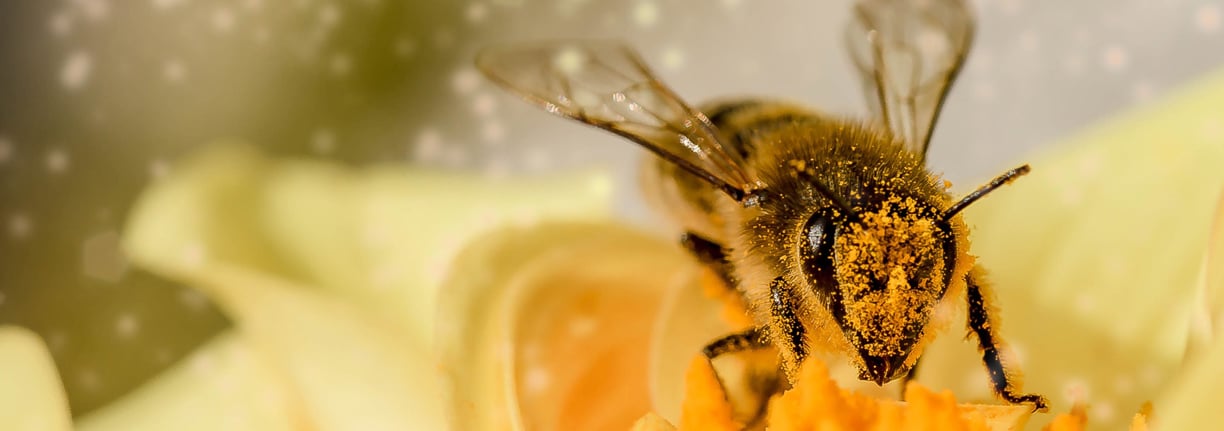
昆虫の場合、ホモロジー・相同論証と呼ばれる次の推論を考えることができる。昆虫は中枢神経系を持つが、それは単に神経節があるからではなく、実際に脳を含んでいるからである。しかし、それは非常に単純で小さな脳であることに注意しなければならない。したがって、昆虫の生理を考慮するだけでは、昆虫に意識があるかどうかを結論づけるには不十分である。それとは別に、昆虫の行動には非常に単純なものもいる。 しかし、非常に複雑な行動をとるものもいる。その明確な例がミツバチである。 例の有名なダンスも含めてハチの行動により我々は、彼らが経験をもち、つまり意識をもつという考えに導かれる4。
ハチと非常によく似た生理学的構造を持ちながら、蚊のように、より単純な行動しか示さない昆虫もいる。その神経系の類似性から、ハチに意識があるなら彼らにも意識があると考えるかもしれない。しかし、それが自動的に成り立つわけではないことを肝に銘じておかなければならない。 昆虫は現存する動物の中で最も数が多い。そのため、昆虫どうしの間には、例えば哺乳類どうしの間にあるよりも遥かに大きな差異が見いだされる。
昆虫どうしの間にはこのような大きな違いがあるため、別の反応として、ハチ(あるいは一般に、ハチが属し、スズメバチやアリを含む昆虫目であるハチ目)には意識があり、他の昆虫には意識がないと主張することもできる。あるいは、たとえすべての昆虫に意識があるとしても、ハチの方がより鮮明な経験をもつことができるのかもしれない。一部の昆虫しか感覚をもたないというよりも、この可能性の方が高そうだ。昆虫の行動には大きな違いがあるが、その生理学的な違いは、一部の昆虫だけが感覚のあると結論づけるほど重要ではない。
もちろん、別の推論も可能である。単純な行動しか示さない存在には感覚がないと考えることもできる。ここから、これらの動物の神経系の構造は、(中心化されているにもかかわらず)意識が出現するほど複雑ではないと措定することができる。したがって、ハチの神経系は単純な行動しか示さない動物の神経系と似ているため、ハチのような動物には必要な神経構造がなく、実際には意識はないだろうという結論になる。そして、ミツバチのような複雑な行動でさえ、意識の存在を示唆しないメカニズムで起こりうると主張することになる。しかし、この説明は、先の説明(すべての昆虫の神経系は十分に似ているので、一部の昆虫が意識を持つのであれば、すべての昆虫が意識をもつに違いない)と比べると、あまり信憑性がないように思われる。意識があっても、比較的単純な行動をとるかもしれない。 しかし意識のない存在が複雑な行動を示すことのほうがありそうにない5。
同じように、昆虫にも天然のオピエートが存在するといった他の基準も考えられる。その場合、昆虫にも感覚があるという主張が補強されるだろう。
クモ綱など他の節足動物の場合、昆虫が近縁種でないことから、昆虫の場合の結論を進化論的論理に当てはめることはできない。それにもかかわらず、相同性からの議論に従うことはできる。昆虫の神経構造はクモの神経構造よりも複雑ではない。さらに、クモ類の行動は多くの昆虫の行動と大差がない。 したがって、昆虫に感覚があるなら、クモ類にも感覚があると推論するのは理にかなっているかもしれない。
即座に明確な答えを導き出すことができない問題に自分たちが直面していることがわかる。それでも我々は、この問題を検討するためにもっているすべての異なる基準を一緒に考慮し、最も妥当な回答の特定に向けて前進するために必要な手持ちの証拠すべてについてとくと考えることができる。この推論プロセスは、(脊椎動物など)他の動物の場合に経る過程と似ている。ただ、ここではより多くの要素を考慮する必要があるかもしれない。
神経節を持つ中枢神経系を持つ二枚貝綱とその他の生物
脳を持たず、いくつかの中枢神経節だけを持つ、より単純な構造を持つ他の生物を考えると、問題はより複雑になる。これは、例えばムール貝やカキなどの二枚貝やカタツムリなどの腹足類など、多くの無脊椎動物の構造である6 。この場合、進化論的論理は使えない。なぜなら、これらの動物が示す行動は非常に単純だからである。その行動は、その行動を示す動物が意識をもつことを必要とせずに行いうるものである。特に、二枚貝やフジツボなどの甲殻類のように、動かずに岩などの表面に付着している動物でそういったことが起こる。二枚貝は、殻を開いたり閉じたりといった動きをすることができる。 しかしこれらの運動は、何らかの刺激-反応メカニズムによって、エネルギー的にもっと経済的な方法で引き起こされるのかもしれない(実際、彼らの行動は、食虫植物やある種の棘皮動物など、中枢神経系を持たない他の生物よりも複雑というわけではない)。いずれにせよこの種の動物の生理学によっては現在の問いに最終的な答えは与えられない7 。彼らは経験をもつかもしれない。意識の基礎は何かという問いに答える方法に関する知識が不足している以上、その可能性を排除することはできない。
この問題を評価するのに役立つかもしれないが、決定的ではない他の指標もある。二枚貝は、他の動物が所有するオピエート受容体と類比的なメカニズムをもっている8 。他の動物では、これらの受容体の機能により、大きな苦しみを和らげることができる。そのため、二枚貝がこの受容体をもつことの極めてもっともらしく、最もありえそうかもしれない説明は、二枚貝にも苦しみがあるということだ。 とはいえこれは完全に決定的な証拠ではない。二枚貝綱の有機体はオピエートを、他の動物とは全く異なる目的で用いている可能性もある。
これらとは別に、二枚貝やその他の非常に単純な中枢神経系をもつ動物が苦しみうるという考えを支持する理由がある。そのひとつは、二枚貝の一部(カタツムリなど)は単純な目をもち、目をもつ生物が視覚経験ももつという考えはもっともらしい9 。二枚貝の心拍数は、捕食者に脅かされている状況で速くなることが発見されている10 。これらの指標は、やはり決定的なものではないが、そうした動物に意識がないとは言い切れないことを示している。ある程度中心化された神経系をもちうる他の動物の場合にも、似たようなことが言える。
もっと詳しく知りたい人のために
Allen, C. & Trestman, M. (2014 [1995]) “Animal consciousness”, Zalta, E. N. (ed.) Stanford encyclopedia of philosophy, Stanford: The Metaphysics Research Lab [accessed on 18 February 2015].
Barr, S.; Laming, P. R.; Dick, J. T. A. & Elwood, R. W. (2008) “Nociception or pain in a decapod crustacean?”, Animal Behaviour, 75, pp. 745-751.
Birch, J. (2020) “The search for invertebrate consciousness”, Noûs, 30 August [accessed on 4 February 2021].
Broom, D. M. (2007) “Cognitive ability and sentience: Which aquatic animals should be protected?”, Diseases of Aquatic Organisms, 75, pp. 99-108.
Crook, R. J. (2013) “The welfare of invertebrate animals in research: Can science’s next generation improve their lot?”, Journal of Postdoctoral Research, 1 (2), pp. 9-18 [accessed on 22 February 2014].
Crook, R. J.; Hanlon, R. T. & Walters, E. T. (2013) “Squid have nociceptors that display widespread long-term sensitization and spontaneous activity after bodily injury”, The Journal of Neuroscience, 33, pp. 10021-10026.
Dawkins, M. S. (2001) “Who needs consciousness?”, Animal Welfare, 10, pp. 19-29.
Eisemann, C. H.; Jorgensen, W. K.; Merritt, D. J.; Rice, M. J.; Cribb, B. W.; Webb, P. D. & Zalucki, M. P. (1984) “Do insects feel pain? A biological view”, Experentia, 40, pp. 164-167.
Elwood, R. W. (2011) “Pain and suffering in invertebrates?”, ILAR Journal, 52, pp. 175-184.
Elwood, R. W. & Adams, L. (2015) “Electric shock causes physiological stress responses in shore crabs, consistent with prediction of pain”, Biology Letters, 11 (1) [accessed on 13 November 2015].
Elwood, R. W. & Appel, M. (2009) “Pain experience in hermit crabs?”, Animal Behaviour, 77, pp. 1243-1246.
Fiorito, G. (1986) “Is there ‘pain’ in invertebrates?”, Behavioural Processes, 12, pp. 383-388.
Gentle, M. J. (1992) “Pain in birds”, Animal Welfare, 1, pp. 235-247.
Gherardi, F. (2009) “Behavioural indicators of pain in crustacean decapods”, Annali dell´Istituto Superiore di Sanita, 45, s. 432-438.
Gibbons, M.; Sarlak, S. & Chittka, L. (2022) “Descending control of nociception in insects?”, Proceedings of the Royal Society B: Biological Sciences, 289 (1978) [accessed on 22 July 2022].
Griffin, D. R. (1984) Animal thinking, Cambridge: Harvard University Press.
Griffin, D. R. (2001) Animal minds: Beyond cognition to consciousness, Chicago: Chicago University Press.
Harvey-Clark, C. (2011) “IACUC challenges in invertebrate research”, ILAR Journal, 52, pp. 213-220.
Horvath, K.; Angeletti, D.; Nascetti, G. & Carere, C. (2013) “Invertebrate welfare: An overlooked issue”, Annali dell´Istituto superiore di sanità, 49, pp. 9-17 [accessed on 3 October 2020].
Huffard, C. L. (2013) “Cephalopod neurobiology: An introduction for biologists working in other model systems”, Invertebrate Neuroscience, 13, pp. 11-18.
Knutsson, S. (2015a) The moral importance of small animals, Master’s thesis, Gothenburg: University of Gothenburg [accessed on 4 January 2016].
Knutsson, S. (2015b) “How good or bad is the life of an insect”, Simon Knutsson, Sep. [accessed on 4 January 2016].
Leonard, G. H.; Bertness, M. D. & Yund, P. O. (1999) “Crab predation, waterborne cues, and inducible defenses in the blue mussel, Mytilus edulis”, Ecology, 75, pp. 1-14.
Lozada, M.; Romano, A. & Maldonado, H. (1988) “Effect of morphine and naloxone on a defensive response of the crab Chasmagnathus granulatus”, Pharmacology, Biochemistry, and Behavior, 30, pp. 635-640.
Magee, B.; Elwood, R. W. (2013) “Shock avoidance by discrimination learning in the shore crab (Carcinus maenas) is consistent with a key criterion for pain”, Journal of Experimental Biology, 216, pp. 353-358 [accessed on 25 December 2015].
Maldonado, H. & Miralto, A. (1982) “Effect of morphine and naloxone on a defensive response of the mantis shrimp (Squilla mantis), Journal of Comparative Physiology, 147, pp. 455-459.
Mather, J. A. (2001) “Animal suffering: An invertebrate perspective”, Journal of Applied Animal Welfare Science, 4, pp. 151-156.
Mather, J. A. (2008) “Cephalopod consciousness: Behavioral evidence”, Consciousness and Cognition, 17, pp. 37-48.
Mather, J. A. & Anderson, R. C. (2007) “Ethics and invertebrates: A cephalopod perspective”, Diseases of Aquatic Organisms, 75, pp. 119-129.
Tomasik, B. (2016 [2015]) “The importance of insect suffering”, Essays on Reducing Suffering, Apr 25 [accessed on 23 March 2017].
Tomasik, B. (2018 [2016]) “Brain sizes and cognitive abilities of micrometazoans”, Essays on Reducing Suffering, 16 Jun [accessed on 18 December 2020].
Tomasik, B. (2019 [2013]) “Speculations on population dynamics of bug suffering”, Essays on Reducing Suffering, Jun 16 [accessed on 18 March 2020].
Tye, M. (2017) Tense bees and shell-shocked crabs: Are animals conscious?, New York: Oxford University Press.
Volpato, G. L. (2009) “Challenges in assessing fish welfare”, ILAR Journal, 50, pp. 329-337.
Walters, E. T. & Moroz, L. L. (2009) “Molluscan memory of injury: Evolutionary insights into chronic pain and neurological disorders”, Brain, Behavior and Evolution, 74, pp. 206-218 [accesed on 22 September 2013].
Wilson, C. D.; Arnott, G. & Elwood, R. W. (2012) “Freshwater pearl mussels show plasticity of responses to different predation risks but also show consistent individual differences in responsiveness”, Behavioural Processes, 89, pp. 299-303.
Zullo, L. & Hochner, B. (2011) “A new perspective on the organization of an invertebrate brain”, Communicative & Integrative Biology, 4, pp. 26-29.
ノート
1 Braithwaite, V. A. (2010) Do fish feel pain?, Oxford: Oxford University Press. Sherwin, O. M. (2001) “Can invertebrates suffer? Or how robust is argument-by-analogy?”, Animal Welfare, 10, pp. 103-108. Sneddon, L. U.; Braithwaite, V. A. & Gentle, M. J. (2003) “Do fishes have nociceptors? Evidence for the evolution of a vertebrate sensory system”, Proceedings of the Royal Society B: Biological Sciences, 270, pp. 1115-1121. Elwood, R. W.; Barr, S. & Patterson, L. (2009) “Pain and stress in crustaceans?”, Applied Animal Behaviour Science, 118, pp. 128-136.
2 Crook, R. J. & Walters, E. T. (2011) “Nociceptive behavior and physiology of molluscs: Animal welfare implications”, ILAR Journal, 52, pp. 185-195.
3 Wigglesworth, V. B. (1980) “Do insects feel pain?”, Antenna, 4, pp. 8-9. Allen-Hermanson, S. (2008) “Insects and the problem of simple minds: Are bees natural zombies?”, Journal of Philosophy, 105, pp. 389-415.
4 Balderrama, N.; Díaz, H.; Sequeda, A.; Núñez, A. & Maldonado H. (1987) “Behavioral and pharmacological analysis of the stinging response in africanized and italian bees”, Menzel, Randolf & Mercer, Alison R. (eds.) Neurobiology and behavior of honeybees, Berlin: Springer, p. 127. Núñez, J.; Almeida, L.; Balderrama, N. & Giurfa, M. (1997) “Alarm pheromone induces stress analgesia via an opioid system in the honeybee”, Physiology & Behaviour, 63, p. 78.
5 これは、自然界における動物の苦しみを検証する画期的な著作で問われている、自然界でポジティブな経験やネガティブな経験がどのように広がっていくのかということに関する中心的な問いである。Ng, Y.-K. (1995) “Towards welfare biology: Evolutionary economics of animal consciousness and suffering”, Biology and Philosophy, 10, pp. 255-285.
6 頭足類のような他の軟体動物は、もっと複雑なまったく異なる神経系を持っていることを念頭に置いてほしい。
7 Crook, R. J. & Walters, E. T. (2011) “Nociceptive behavior and physiology of molluscs: Animal welfare implications”, op. cit.
8 Smith, J. A. (1991) “A question of pain in invertebrates”, ILAR Journal, 33, pp. 25-31. Sonetti, D.; Mola, L.; Casares, F.; Bianchi, E.; Guarna, M. & Stefano, G. B. (1999) “Endogenous morphine levels increase in molluscan neural and immune tissues after physical trauma”, Brain Research, 835, pp. 137-147. Cadet, P.; Zhu, W.; Mantione, K. J.; Baggerman, G. & Stefano, G. B. (2002) “Cold stress alters Mytilus edulis pedal ganglia expression of μ opiate receptor transcripts determined by real-time RT-PCR and morphine levels”, Molecular Brain Research, 99, pp. 26-33.
9 Morton, B. (2001) “The evolution of eyes in the Bivalvia”, Gibson, R. N.; Barnes, M. & Atkinson, R. J. A. (eds.) Oceanography and marine Biology: An annual review, vol. 39, London: Taylor & Francis, pp. 165-205. Morton, B. (2008) “The evolution of eyes in the Bivalvia: New insights”, American Malacological Bulletin, 26, pp. 35-45. Aberhan, M.; Nürnberg, S. & Kiessling, W. (2012) “Vision and the diversification of Phanerozoic marine invertebrates”, Paleobiology, 38, pp. 187-204. Malkowsky, Y.; Götze, M.-C. (2014) “Impact of habitat and life trait on character evolution of pallial eyes in Pectinidae (Mollusca: bivalvia)”, Organisms Diversity & Evolution, 14, pp. 173-185. Morton, B. & Puljas, S. (2015) “The ectopic compound ommatidium-like pallial eyes of three species of Mediterranean (Adriatic Sea) Glycymeris (Bivalvia: Arcoida). Decreasing visual acuity with increasing depth?”, Acta Zoologica, 97, pp. 464-474.
10 Kamenos, N. A.; Calosi, P. & Moore, P. G. (2006) “Substratum-mediated heart rate responses of an invertebrate to predation threat”, Animal Behaviour, 71, pp. 809-813.
11 Charifi, M.; Sow, M.; Ciret, P.; Benomar, S. & Massabuau, J.-C. (2017) “The sense of hearing in the Pacific oyster, Magallana gigas”, PLOS ONE, 12 (10) [accessed on 24 January 2018].